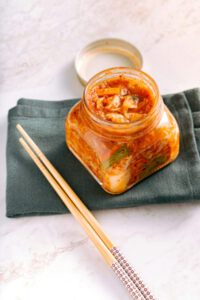
Kimchi, 김치
Kimchi (Korean: 김치) is a traditional Korean side dish (banchan) consisting of salted and fermented vegetables, most often napa cabbage or Korean radish. A wide selection of seasonings are used, including gochugaru (Korean chili powder), spring onions, garlic, ginger, and jeotgal (a salted seafood). Kimchi is also used in a variety of soups and stews. Kimchi is a staple food in Korean cuisine and is eaten as a side dish with almost every Korean meal.
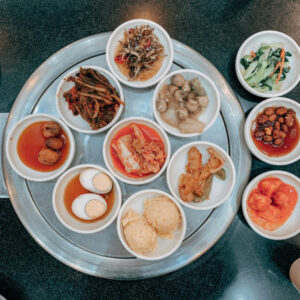
Banchan, 반찬
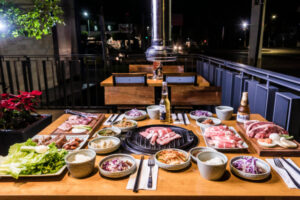
Banchan (Korean: 반찬) are small side dishes served along with cooked rice in Korean cuisine. Banchan are set in the middle of the table to be shared. At the center of the table is the secondary main course, such as galbi or bulgogi, and a shared pot of jjigae. Bowls of cooked rice and guk (soup) are set individually. Banchan are served in small portions, meant to be finished at each meal and replenished during the meal if not enough. Usually, the more formal the meals are, the more banchan there will be. Jeolla province is particularly famous for serving many different varieties of banchan in a single meal.
The basic table setting for a meal called bansang usually consists of bap (밥, cooked rice), guk or tang (soup), gochujang or ganjang, jjigae, and kimchi. According to the number of banchan added, the table setting is called 3 cheop (삼첩), 5 cheop (오첩), 7 cheop (칠첩), 9 cheop (구첩), 12 cheop (십이첩) bansang, with the 12 cheop used in Korean royal cuisine.
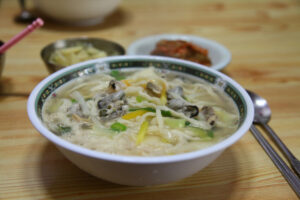
Kal-guksu, 칼국수
Kal-guksu (Korean: 칼국수) is a Korean noodle dish consisting of handmade, knife-cut wheat flour noodles served in a large bowl with broth and other ingredients. It is traditionally considered a seasonal food, consumed most often in summer. Its name comes from the fact that the noodles are not extruded, pulled, or spun, but cut.
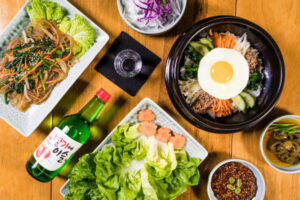
Bibimbap, 비빔밥
Bibimbap (Korean: 비빔밥), is a Korean rice dish. The term bibim means "mixing" and bap is cooked rice. It is served as a bowl of warm white rice topped with namul (sautéed or blanched seasoned vegetables) and gochujang (chili pepper paste). Egg and sliced meat (usually beef) are common additions, stirred together thoroughly just before eating.
In South Korea, Jeonju, Jinju, and Tongyeong are especially famous for their versions of bibimbap. In 2017, the dish was listed at number 40 on the World's 50 most delicious foods readers' poll compiled by CNN Travel.
Gimbap, 김밥
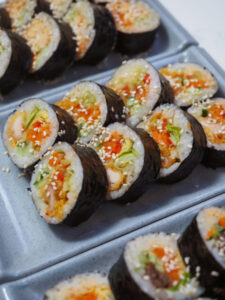
Gimbap (Korean: 김밥), also romanized as kimbap, is a Korean dish made from cooked rice, vegetables, fish, and meat rolled in gim—dried sheets of seaweed—and served in bite-sized slices. The origins of gimbap are debated. Some sources suggest it originates from Japanese norimaki, introduced during Japanese colonial rule, while others argue it is a modernized version of bossam from the Joseon era. The dish is often part of a packed meal, or dosirak, to be eaten at picnics and outdoor events, and can serve as a light lunch along with danmuji (yellow pickled radish) and kimchi. It is a popular takeaway food in South Korea and abroad and is known as a convenient food because of its portability.

Naengmyeon, 냉면
Naengmyeon (Korean: 냉면) is a noodle dish of North Korean origin which consists of long and thin handmade noodles made from the flour and starch of various ingredients, including buckwheat (메밀, memil), potatoes, sweet potatoes, arrowroot starch (darker color and chewier than buckwheat noodles), and kudzu (칡, chik). Buckwheat predominates (despite the name, it is not a wheat but rather is more closely related to sorrel). Other varieties of naengmyeon are made from ingredients such as seaweed and green tea.
In modern times, the mul naengmyeon (물 냉면) variant is commonly associated with and popularly consumed during the summer; however, it was historically a dish enjoyed during winter.
Korean Barbecue, 고기구이
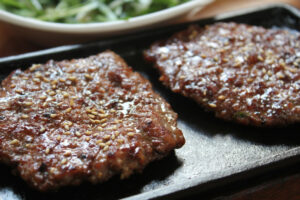
Korean barbecue (Korean: 고기구이) is a popular method in Korean cuisine of grilling meat, typically beef, pork or chicken. Such dishes are often prepared on gas or charcoal grills built into the dining table itself. Some Korean restaurants that do not have built-in grills provide customers with portable stoves for diners to use at their tables. Alternatively, a chef uses a centrally displayed grill to prepare dishes that are made to order.
The most representative form of gogi-gui is bulgogi, usually made from thinly sliced marinated beef sirloin or tenderloin. Another popular form is galbi, made from marinated beef short ribs. However, gogi-gui also includes many other kinds of marinated and unmarinated meat dishes, and can be divided into several categories. Korean barbecue is popular in its home country.
Hoe, 회
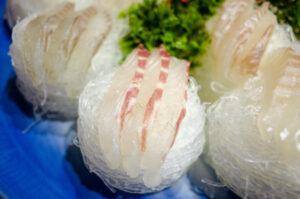
Hoe (Korean: 회) is a traditional Korean seafood dish that is eaten by trimming raw meat or raw fish. In addition to fish, it is also made with other marine products such as shrimp and squid, raw meat of land animals, and vegetable ingredients, but without any special prefix, it mainly refers to raw fish. It is called Sukhoe that is blanched by applying heat. It has been a favorite food since the Three Kingdoms of Korea (57 BC – 668 AD), and is one of the oldest foods in Korean history.
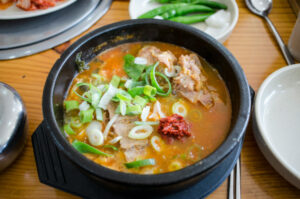
Doenjang-jjigae, 된장찌개
Doenjang-jjigae (Korean: 된장찌개), referred to in English as soybean paste stew, is a Korean traditional jjigae (stew-type dish), made from the primary ingredient of doenjang (soybean paste), and additional optional ingredients vegetables, seafood, and meat. It is one of the most iconic and popular traditional dishes in Korean cuisine, and is often eaten regularly regardless of occasion or time of day. Doenjang-jjigae was initially made with home-made doenjang; however, due to extensive industrialisation of soybean paste, households and restaurants nowadays use factory-made doenjang instead as their ingredient. From traditional to modern Korean cuisine, doenjang has become one of the most frequently used jang (sauce/paste). It is claimed as a national dish.
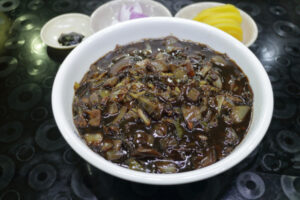
Jajangmyeon, 자장면
Jajangmyeon (Korean: 자장면) or jjajangmyeon (짜장면) is a Korean Chinese noodle dish topped with a thick sauce made of chunjang, diced pork, and vegetables. It originated in Incheon, Korea where Chinese migrant workers brought over zhajiangmian from Shandong in the late 19th century. Modifications in Korea such as a darker and sweeter sauce differentiate the Korean version from the Chinese dish. Variants of the dish use seafood, or other meats.

Tteokbokki, 떡볶이
Tteokbokki (Korean: 떡볶이), or simmered rice cake, is a popular Korean food made from small-sized garae-tteok (long, white, cylinder-shaped rice cakes) called tteokmyeon (떡면; "rice cake noodles") or commonly tteokbokki-tteok (떡볶이 떡; "tteokbokki rice cakes"). Eomuk (fish cakes), boiled eggs, and scallions are some common ingredients paired with tteokbokki in dishes. It can be seasoned with either spicy gochujang (chili paste) or non-spicy ganjang (soy sauce)-based sauce; the former is the most common form, while the latter is less common and sometimes called gungjung-tteokbokki (royal court tteokbokki).
Today, variations also include curry-tteokbokki, cream sauce-tteokbokki, jajang-tteokbokki, seafood-tteokbokki, rose-tteokbokki, galbi-tteokbokki and so on. Tteokbokki is commonly purchased and eaten at bunsikjip (snack bars) as well as pojangmacha (street stalls). There are also dedicated restaurants for tteokbokki, where it is referred to as jeukseok tteokbokki (impromptu tteokbokki). It is also a popular home dish, as the garae-tteok can be purchased in pre-packaged, semi-dehydrated form.

Janchi-guksu, 잔치국수
Janchi-guksu (Korean: 잔치국수) is a Korean noodle dish consisting of wheat flour noodles in a light broth made from anchovy and sometimes also dasima (kelp). Beef broth may be substituted for the anchovy broth. It is served with a sauce made from sesame oil, ganjang and small amounts of chili pepper powder and scallions. Thinly sliced jidan (지단, fried egg), gim (laver) and zucchini are added on top of the dish as garnishes, though various other vegetables or kimchi can also be used. The word janchi means "feast" in Korean, in reference to the festive occasions on which the dish is prepared, such as for a wedding or sixtieth birthday celebration.

Dalgona Coffee, 달고나
Dalgona coffee, also known as hand beaten coffee, is a beverage originating from Macau made by whipping equal parts instant coffee powder, sugar, and hot water until it becomes creamy and then adding it to cold or hot milk. Occasionally, it is topped with coffee powder, cocoa, crumbled biscuits, or honey. It was popularized on social media during the COVID-19 pandemic, when people refraining from going out started making videos of whipping the coffee at home, by hand without using electrical mixers. After the drink spread to South Korea, it was renamed "dalgona coffee" which is derived from dalgona, a Korean sugar candy, due to the resemblance in taste and appearance, though most dalgona coffee does not actually contain dalgona.
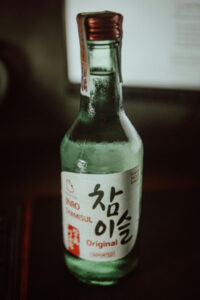
Soju, 소주
Soju (Korean: 소주) is a clear and colorless Korean distilled alcoholic beverage, traditionally made from rice, but later from other grains and has a flavor similar to vodka. It is usually consumed neat. Its alcohol content varies from about 12.5% to 53% alcohol by volume (ABV), although since 2007 low alcohol soju below 20% has become more popular.
Traditionally, most brands of soju are produced in the Andong region, but also in other regions and countries. While soju was traditionally made from the rice, South Korean ethanol producers replace rice with other starch, such as cassava due to significantly lower capital costs. Soju often appears similar to several other East Asian liquors while differing in alcohol contents.